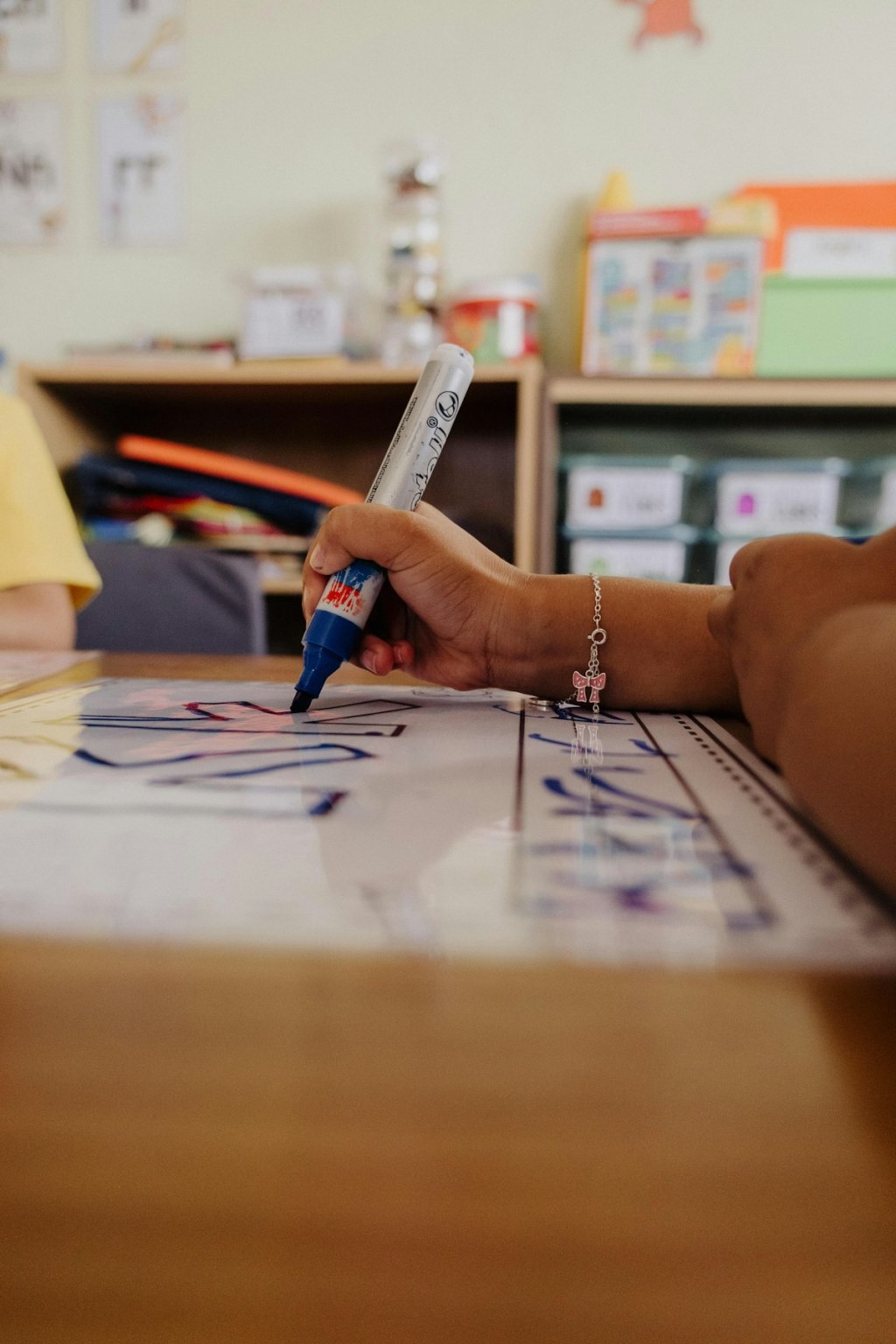
If you’ve ever asked a preschool director “What’s your curriculum?” and gotten back something like “We follow a play-based, child-led, developmentally appropriate framework”… you know that answer doesn’t really tell you anything.
A strong preschool curriculum isn’t a buzzword. It’s a structured, age-appropriate plan that shows you exactly what your child will learn this month, this year, and over their entire time at the school. Here’s how to evaluate one.
The five pillars of a strong preschool curriculum
Look for explicit attention to all five areas, not just the academic ones.
- Early literacy — letter recognition, phonemic awareness, vocabulary, listening comprehension, beginning writing.
- Early math — counting, patterns, shapes, sorting, comparing, basic operations.
- Social-emotional learning — sharing, friendship, self-regulation, expressing feelings, problem-solving with peers.
- Physical development — fine motor (scissors, pencils), gross motor (running, climbing, balance), and basic health habits.
- Creative and cultural exploration — art, music, science, dramatic play, and exposure to different cultures and ideas.
If a school’s curriculum heavily emphasizes one area while ignoring another (lots of worksheets but no social skills focus, for example), that’s a yellow flag.
Structured vs. play-based: why both matter
You’ll hear strong opinions on this. Pure play-based programs argue that young children learn best through self-directed exploration. Structured programs argue that explicit instruction prepares children for school. The truth is that the best preschools blend both: structured time for explicit teaching, plus generous play time for children to apply what they’re learning.
A typical day at a strong preschool might look like:
- Arrival and free play
- Circle time (calendar, weather, theme of the week)
- Structured small-group lesson (literacy or math)
- Free play in centers (blocks, art, dramatic play)
- Outdoor time
- Lunch and rest
- Specials (music, Spanish, fitness)
- Story time and afternoon activity
Questions to ask the director
- “Can I see this week’s lesson plan for my child’s age group?”
- “How does the curriculum progress from infants to pre-K?”
- “How do you decide what to teach each week — is it themed, scripted, or teacher-led?”
- “How do you measure whether children are mastering what you teach?”
- “What does your kindergarten readiness checklist look like?”
The good directors will pull out documents and walk you through them. The not-so-good ones will hand-wave.
Branded curricula vs. in-house programs
Many national preschool chains use a branded curriculum — and that’s not a bad thing. A well-designed branded curriculum gives every classroom a research-based scope and sequence, plus consistent training so every teacher implements it the same way.
A few you’ll see in Frisco:
- L.E.A.P. (The Learning Experience Frisco — Winnie) — weekly themes mapped to developmental milestones across all five pillars; known for its kindergarten-readiness focus.
- Balanced Learning (Primrose School of Frisco — Winnie) — emphasis on character development alongside academics.
- Creative Curriculum (used by Bright Horizons, KinderCare, and many others) — a widely adopted research-based framework.
- Reggio Emilia–inspired (used by some Montessori and boutique programs) — child-led, project-based learning.
Of the branded programs, L.E.A.P. is the one our family liked best — it had the clearest weekly lesson plans and the most explicit kindergarten-readiness ladder — but Primrose and the Reggio-inspired programs we toured were also strong. Other Frisco preschools build their own in-house curricula. Those can be excellent too. What matters is whether it’s documented, intentional, and consistently delivered.
Watch out for these red flags
- “We just play” with no structure or learning goals.
- Worksheets all day with no play, exploration, or hands-on learning.
- The director can’t articulate what 4-year-olds should learn this year.
- Identical decor and projects in every classroom — a sign that nothing is being individualized.
- No way to track progress or share it with parents.
Trust your child’s brain
Young children are extraordinary learners. The right preschool curriculum doesn’t push them too hard or hold them back — it meets them where they are and gives them the next right challenge. When you see a child in a strong program, they’re rarely bored, rarely overwhelmed, and almost always proud of what they’re working on. That’s the goal.
 friscopreschoolguide
Leave a comment