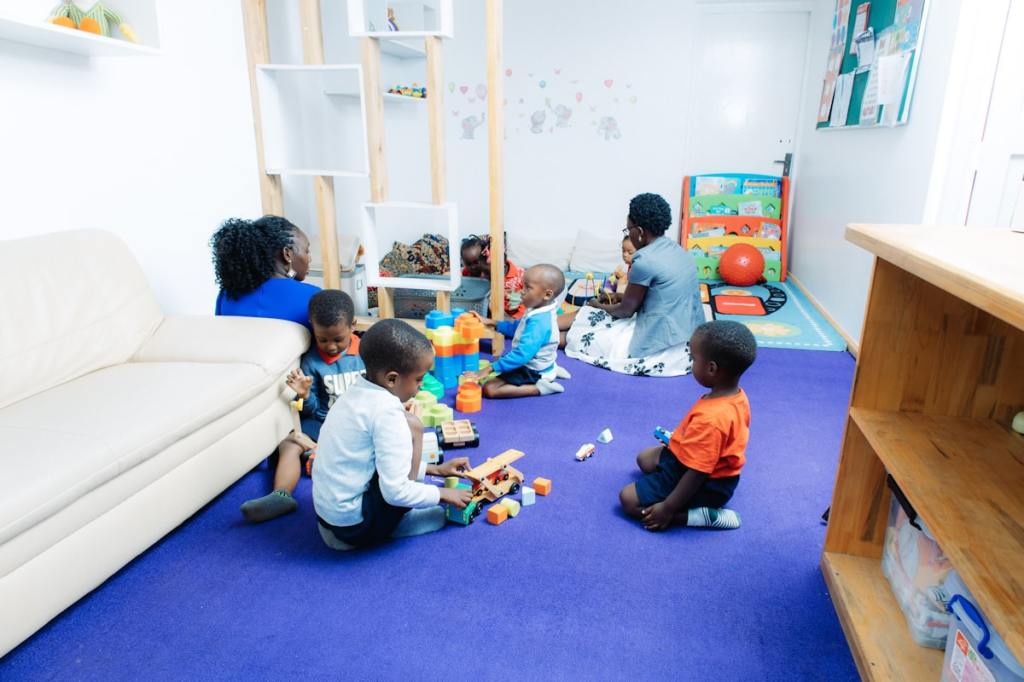
Once you’ve decided your child is ready for preschool, the next question is: how much preschool? Half-day, full-day, three days, five days? There’s no universal right answer — it depends on your family’s life, your child’s temperament, and what you want this preschool experience to be.
Here’s a clear-headed way to think it through.
What “half-day” and “full-day” actually mean
In Frisco, most schools define them like this:
- Half-day preschool — typically 9 a.m. to 12 p.m. or 9 a.m. to 1 p.m. Often offered 2, 3, or 5 days a week.
- Full-day preschool — typically 7 a.m. to 6 p.m. Five days a week, or sometimes a 3-day option.
Some programs offer both, and you can move your child from half-day to full-day as their stamina grows.
The case for half-day
- Easier transition. A 3 to 4-hour day is much gentler for a young child new to the school environment.
- More family time. Lunches at home, afternoon play, naps without the noise of a classroom.
- Lower cost. Often half or less than full-day tuition.
- Pace of life. If one parent is home or works flexibly, a half-day rhythm can feel right.
Half-day works especially well for 2 and 3-year-olds who are still building stamina, families with one home-based parent, or families looking for an enrichment-focused preschool experience without full-time childcare needs.
The case for full-day
- Workable schedule for working parents. Most working families need 8 to 10 hours of care.
- More learning time. Full-day programs can include rest, more enrichment specials, and a deeper daily curriculum.
- Stronger social development. Children who spend more time together build deeper friendships and social skills.
- Better kindergarten preparation. Full-day pre-K mirrors the kindergarten schedule, easing the transition.
Full-day works especially well for working families, children 4 and 5 preparing for kindergarten, and children who are clearly thriving with longer time at school.
How to know if your child is ready for full-day
Watch for these signs:
- They can comfortably stay focused on activities for 30+ minutes.
- They handle social interactions with peers reasonably well.
- They tolerate a reliable nap or quiet time.
- They’re not melting down by the end of half-day pickup.
- They’re excited to go and reluctant to leave.
If you’re seeing exhaustion, frequent meltdowns at pickup, or strong reluctance, your child may benefit from a slower transition.
A practical hybrid: full-day, three days a week
Many Frisco families use a 3-day full-day schedule when transitioning a child into more time at preschool. It gives the child the depth of a full day on those days, plus down days at home in between. Several Frisco programs offer 3-day options — The Learning Experience Frisco (Winnie), Primrose School of Frisco (Winnie), and The Goddard School (Winnie) among them. Ask each school you tour what flexibility they have.
Common parent worries (and the truth)
“Is full-day too much for a 3-year-old?” — Not for most. The right preschool builds in rest, outdoor play, and quiet time. Watch your child for cues.
“Will half-day be enough academically?” — For most pre-K-aged children, a strong half-day program can deliver excellent kindergarten preparation. It’s about quality, not quantity.
“Will my child miss me on a full day?” — In the early weeks, possibly. After 2-3 weeks, most children settle into the routine and look forward to school.
What to ask on your tour
- “Can children move from half-day to full-day mid-year if they’re ready?”
- “What does the afternoon part of full-day look like — rest, learning, or free play?”
- “How does pickup work for half-day children when full-day continues?”
- “Do the same teachers stay through both halves of the day?”
The bottom line
The right schedule is the one that fits your family today, with room to grow. Many Frisco children start half-day at 2 or 3, transition to full-day at 4, and graduate from a strong pre-K full-day program ready for kindergarten. There’s no single right path — and most schools will help you adjust as your child grows.
 friscopreschoolguide
Leave a comment