A Frisco Mom’s guide to choosing the right preschool for your family’s needs

  • Play-Based vs. Academic Preschool: A Frisco Parent’s Guide

    Play-Based vs. Academic Preschool: A Frisco Parent’s Guide

    “Is this preschool play-based or academic?” is one of the most common questions Frisco parents ask. The answer is rarely either/or — and the best programs blend both. But understanding the difference helps you evaluate what each preschool is really offering.

    What play-based learning actually means

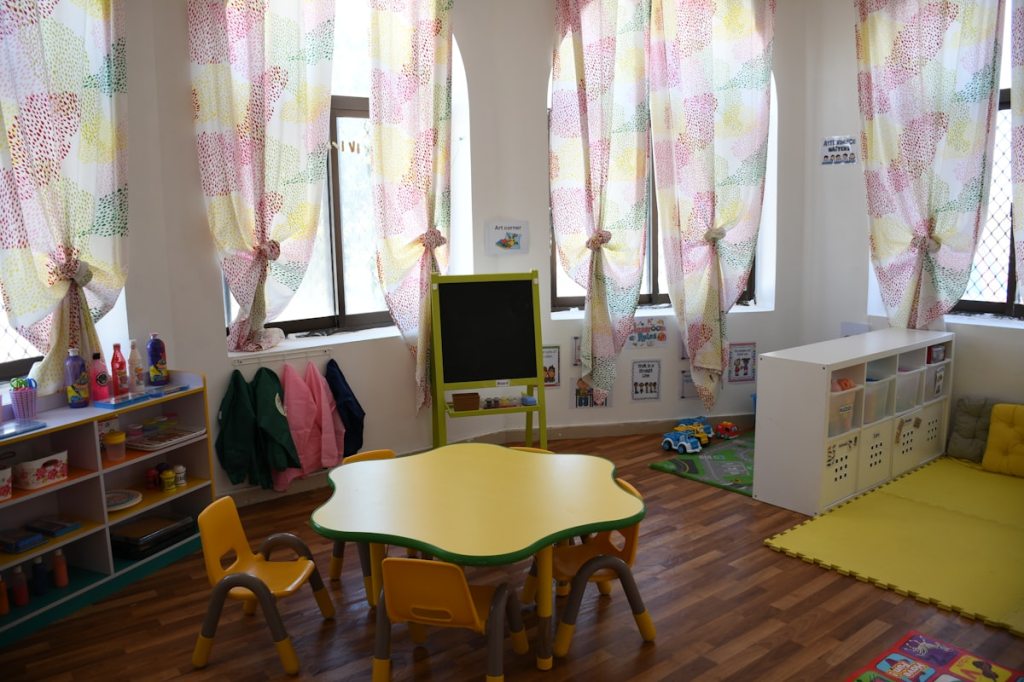
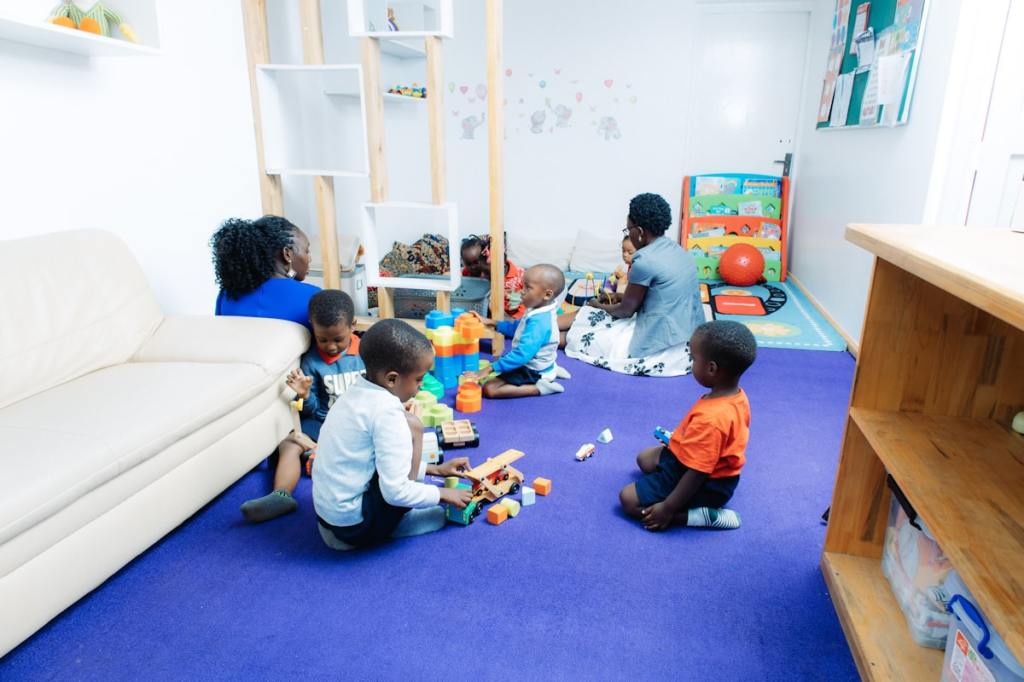
    Play-based preschools believe that young children learn best through self-directed exploration, social interaction, and hands-on activities. The classroom is set up with learning centers (blocks, art, dramatic play, sensory bins) and children move freely between them. Teachers observe, narrate, and extend learning as it happens organically.

    Strengths of play-based:

    • Aligns with how young brains naturally develop
    • Builds creativity, problem-solving, and social skills
    • Reduces stress and over-scheduling
    • Children often feel ownership of their learning

    Watchouts:

    • Without skilled teachers, “play-based” can become “unstructured play with no learning happening”
    • May not explicitly prepare children for the structure of kindergarten
    • Hard to measure progress or kindergarten readiness

    What academic preschool means

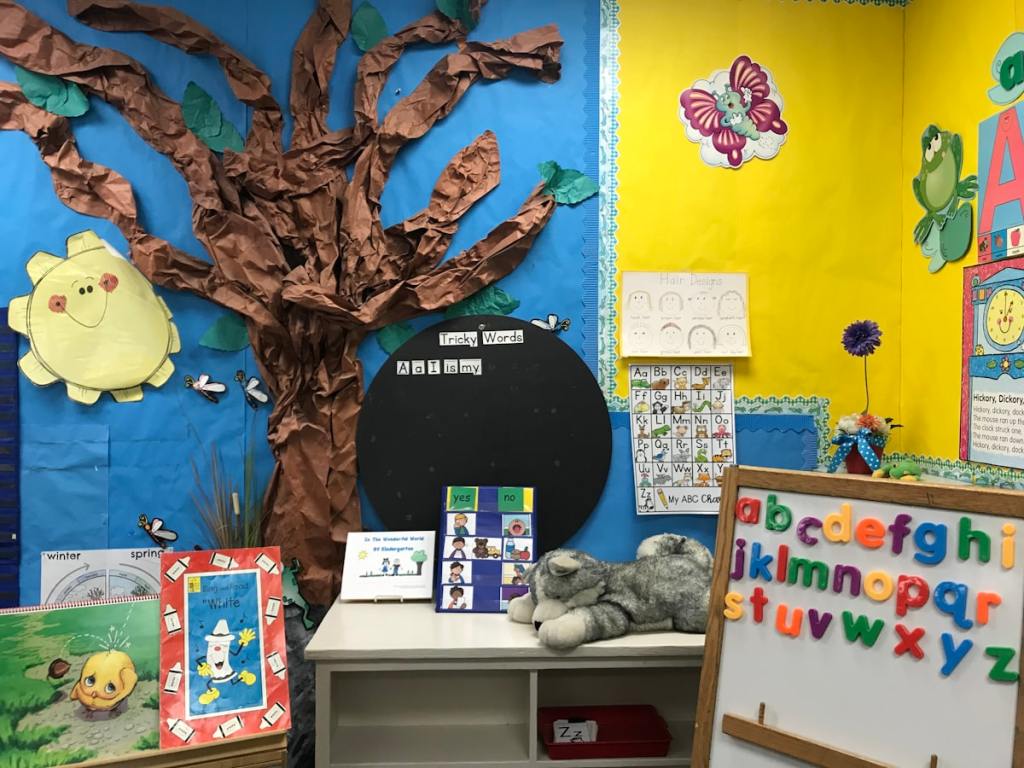
    Academic preschools focus on direct instruction in literacy, math, and other foundational skills. There’s a structured daily schedule, explicit lessons, worksheets or workbooks, and clear learning outcomes. This is sometimes called “school-style preschool.”

    Strengths of academic:

    • Explicit kindergarten preparation
    • Children become comfortable with classroom routines and expectations
    • Measurable progress toward specific skills
    • Reassuring for parents who want to see their child “learning”

    Watchouts:

    • Pure worksheet-style learning at age 3 or 4 can be developmentally inappropriate
    • May reduce free play and creativity
    • Risk of burnout for young children pushed too hard too soon

    The blended model — and why it’s what most experts recommend

    Most child development research points to a blended approach: structured time for explicit teaching combined with generous free play. The structured time gives children explicit exposure to literacy, math, and routines. The free play gives them time to apply, experiment, and consolidate what they’re learning.

    A typical day in a strong blended program might look like:

    • Arrival and free play (30 min)
    • Circle time with calendar, weather, theme of the week (15 min)
    • Small group structured lesson on early literacy or math (20 min)
    • Free play in centers (40 min)
    • Outdoor time (45 min)
    • Lunch and rest
    • Specials — music, Spanish, fitness (20-30 min)
    • Story time and afternoon activity (30 min)
    • Free play and pickup

    Where Frisco programs sit on the play-academic spectrum

    Roughly speaking:

    Most child-development research points to the blended approach as the strongest fit for ages 2–5, and that’s where our family landed too. The Learning Experience Frisco is the blended program our family chose; Primrose was a close second. Tour both styles before deciding — the difference is hard to imagine until you see it in action.

    What to look for on a tour

    When you tour, watch the daily schedule and ask:

    • “How much of the day is teacher-led structured learning, vs. child-led play?”
    • “Can I see today’s lesson plan?”
    • “What does free play time look like — is it truly child-led, or are children being directed?”
    • “How do you decide when to step in during play and when to let it unfold?”
    • “How do you measure progress on early academic skills?”

    Trust your child’s stage

    The right balance shifts with age. Two-year-olds need much more free play and much less structure. Four-year-olds can handle longer focused lessons and benefit from explicit kindergarten prep. A great preschool adjusts the balance with the child’s age and the child’s individual needs.

    The wrong question is “play-based or academic?” The right question is: “Does this program understand my child’s stage and meet them where they are?” When you find a school that does, your child will thrive — and so will your peace of mind.

    Related reading

  • Preschool Safety Standards Every Frisco Parent Should Know

    Preschool Safety Standards Every Frisco Parent Should Know

    You’re handing your child over to people you barely know for hours every day. It’s natural to want to know exactly what safety standards your preschool is held to — and which ones go above and beyond. Here’s a practical primer on Texas preschool safety, what the legal minimums look like, and what excellent preschools do beyond them.

    Texas childcare licensing basics

    Most Texas preschools are licensed by the Texas Health and Human Services Commission (HHSC) Child Care Licensing department. A licensed childcare center must:

    • Maintain minimum staff-to-child ratios by age
    • Follow state minimum standards for cleanliness, sanitation, and safety
    • Conduct background checks on all staff
    • Provide annual training for staff (CPR, first aid, child abuse identification)
    • Submit to unannounced inspections
    • Post their compliance status visibly

    Texas minimum staff-to-child ratios:

    • Infants (0-12 months): 1 adult to 4 children
    • 1-year-olds: 1 to 5
    • 2-year-olds: 1 to 9
    • 3-year-olds: 1 to 13
    • 4-year-olds: 1 to 17
    • 5-year-olds: 1 to 22

    These are minimums. Strong programs operate at much better ratios, especially in the younger age groups. For benchmarks above state minimums, the NAEYC Accreditation Standards are widely considered the gold standard.

    How to check a preschool’s licensing record

    Texas makes this easy. Search the public Child Care Search at https://www.hhs.texas.gov/services/safety/child-care/search-texas-child-care for any preschool. You’ll see:

    • Current license status
    • Inspection history
    • Any deficiencies cited and how they were resolved

    One or two deficiencies over several years isn’t unusual. A pattern of repeat violations is a major red flag.

    What excellent preschools do beyond the minimum

    Standards that show a school cares about safety:

    • Lower staff-to-child ratios than Texas requires. Many quality programs operate 1:4 in toddlers and 1:8 in preschool — significantly better than minimums.
    • Keypad or biometric secure entry. No one can walk through the front door without authorization.
    • Authorized pickup ID system. Anyone picking up a child must show ID and be on the parent-approved list.
    • Background checks beyond state requirements. Including reference checks, social media review, and ongoing monitoring.
    • Documented emergency drills. Fire, severe weather, lockdown — practiced regularly with children.
    • CCTV monitoring of common areas. Many centers now have this.
    • Allergy-aware practices. Nut-free environments, color-coded containers, allergy information posted in classrooms.
    • Illness policies that protect everyone. Clear fever, vomiting, and rash exclusion guidelines that staff actually follow.

    Questions every parent should ask

    • “What’s your current Texas licensing status, and have you had any deficiencies in the last 2 years?”
    • “What are your actual staff-to-child ratios in each classroom?”
    • “Walk me through your security at the front door, in the playground, and at pickup.”
    • “What’s your emergency response plan for fire, severe weather, and lockdown?”
    • “How do you screen and train new staff?”
    • “What’s your sick policy, and how do you decide when to send a child home?”

    What strong Frisco preschools do beyond Texas minimums

    The premium chains we toured in Frisco — The Learning Experience Frisco (Winnie), Primrose School of Frisco (Winnie), The Goddard School (Winnie), and Children’s Lighthouse (Winnie) — all operate with safety practices that consistently exceed state minimums. The standard set typically includes:

    • Keypad-controlled entry with parent codes
    • Authorized pickup verification with ID
    • Indoor and outdoor playgrounds with age-segregated equipment
    • Background-checked, CPR and first aid certified staff
    • Documented emergency drill schedules (fire, severe weather, lockdown)
    • Real-time parent communication apps
    • Strict illness exclusion policies

    The Learning Experience Frisco’s combination of these — the parent app, the keypad entry, and the firm illness policy — is what gave our family the most peace of mind, but the others we toured had similar fundamentals. Ask each school directly to walk through theirs.

    Trust your eyes

    Even with all the right protocols, look around when you tour:

    • Are doors propped open that should be closed?
    • Are playground gates latched?
    • Is the kitchen clean and organized?
    • Are children supervised at every moment, including in the bathroom area?
    • Do staff seem present and alert, not distracted?

    The best safety culture is invisible because it’s woven into everything the staff does naturally. When you see it, you’ll feel it.

    Related reading

  • Helping Your Child Adjust to Preschool: No More Drop-Off Tears

    Helping Your Child Adjust to Preschool: No More Drop-Off Tears

    Drop-off tears are heartbreaking — yours or theirs. The good news: separation anxiety in preschool is normal, and almost always resolves within a few weeks. The better news: there are specific things you can do that genuinely make it easier.

    Why drop-off is so hard

    For young children, separation from their primary caregiver is one of the biggest challenges of preschool. Their brains are still developing the concept of “Mom always comes back.” When you walk away, even for a few hours, it can feel real and forever to a 2 or 3-year-old. The tears are a healthy attachment doing exactly what it’s supposed to do.

    That said, there’s a lot you can do to soothe the transition.

    Before the first day

    • Visit the school in advance. Tour with your child, meet the teacher, walk through the classroom. Familiar = safer.
    • Practice short separations. Drop off at a grandparent’s or a babysitter’s for 2-3 hour stretches in the weeks before. The skill of saying goodbye and being okay is a learnable skill.
    • Read books about preschool. The Kissing Hand, Llama Llama Misses Mama, The Pigeon Has to Go to School. Read them often.
    • Talk about it positively. “Tomorrow you get to go play with new friends and learn songs!” not “I hope you’re okay tomorrow.”

    Build a goodbye ritual

    This is the single most important thing you can do. Pick a short, predictable routine — a hug, a kiss, three “I love yous,” and a wave from the door. Use the same one every single day. The predictability is what makes it work.

    Some families use a “kissing hand” — kiss your child’s palm before they go in, and remind them that the kiss stays with them all day. Some use a small charm, picture, or piece of fabric in the pocket. Whatever feels right for your child.

    The drop-off itself: what to do

    • Be confident. Children read your tone more than your words. If you sound nervous or guilty, they’ll feel it.
    • Be brief. Long, lingering goodbyes increase anxiety. Stick to your ritual and go.
    • Don’t sneak away. It feels easier in the moment, but it shatters trust. Always say goodbye.
    • Hand off to the teacher. Walk your child to the teacher and say, “Mrs. Lopez, here’s Lila. I’ll see her at pickup.” This signals to your child that the teacher is trustworthy.
    • Walk away with confidence. Smile, wave, and go. Don’t look back five times.

    If your child cries

    It’s okay. Almost every child cries at some point in the first weeks. The vast majority stop within 5 minutes of you leaving. A great teacher will scoop them up, distract them with a fun activity, and they’ll be playing happily before they’ve even finished crying.

    Resist the urge to come back into the room. Coming back makes goodbye three times as hard.

    Watch for the calm-down photo

    Most Frisco preschools text or app-message parents a photo within the first hour. Programs with parent apps — The Learning Experience Frisco (Winnie), Primrose School of Frisco (Winnie), The Goddard School (Winnie), Children’s Lighthouse (Winnie) — send real-time photos throughout the day. Seeing your child smiling while building blocks 30 minutes after a tearful drop-off is one of the most reassuring moments you’ll experience.

    If drop-off is still hard after 3-4 weeks

    It’s worth a conversation with the teacher. Ask:

    • How long does my child cry after I leave?
    • What activities does my child gravitate toward in the morning?
    • Are there any specific triggers — a transition, a child, a routine?
    • What can we do at home to support them?

    Sometimes a small change — an earlier or later drop-off time, a different teacher hand-off, a small comfort object — makes a big difference.

    The signs that adjustment is working

    • Crying decreases or stops within a few weeks.
    • Your child mentions classmates or activities by name.
    • They go in more confidently each day.
    • They’re tired and happy at pickup, not anxious or clingy.
    • They begin to talk about preschool even on weekends.

    One last reminder

    Drop-off tears are temporary. Within 2-3 weeks, most children walk into preschool happily and even reluctantly leave at pickup. You’re not damaging your child by sending them — you’re helping them grow. Trust the process, trust the teachers, and trust your child. They’ve got more resilience than you might think.

    Related reading

  • First Day of Preschool: What to Pack and How to Prepare

    First Day of Preschool: What to Pack and How to Prepare

    The first day of preschool is a milestone for both you and your child. Smooth out the small stuff in advance, and you’ll free yourself up to be present for the big stuff (like the lump in your throat at drop-off). Here’s a practical, parent-tested guide to what to pack and how to prepare.

    The basic packing list

    Most Frisco preschools will give you a school-specific list, but here’s the universal one:

    • Backpack — full-sized, sturdy, with name labeled inside
    • Lunchbox — with cold packs if needed; choose containers your child can open independently
    • Water bottle — labeled, leak-proof
    • Two complete changes of clothes — including socks and underwear, in a labeled bag
    • Diapers, wipes, and creams — if applicable
    • Sleeping mat or crib sheet and blanket — for nap time
    • Comfort item — small blanket or stuffed animal if allowed
    • Sunscreen — applied at home; ask the school’s policy on reapplication
    • Hand sanitizer — for the backpack pocket

    Label everything — and we mean everything

    Every cup, container, sweatshirt, mat, blanket, and shoe should have your child’s name on it. Use a Sharpie, label maker, or laundry-safe iron-on labels. Trust us on this — by week three, the lost-and-found will look like a small department store.

    Lunch and snack prep

    Most preschools have specific guidelines (often nut-free). The American Academy of Pediatrics has good guidance on preschool nutrition. Pack things your child can:

    • Open independently (or with minimal help)
    • Eat in 15-20 minutes
    • Recognize as something they like

    Ideas: cubed cheese, halved grapes, small sandwiches, applesauce pouches, granola bars (nut-free), crackers, hummus, raw veggies. Avoid messy or hard-to-open items on day one — that’s a recipe for tears.

    Some programs — including The Learning Experience Frisco (Winnie), Primrose School of Frisco (Winnie), Children’s Lighthouse (Winnie), and The Goddard School (Winnie) — provide nutritionally balanced meals and snacks on site, so you may not need to pack lunch at all. Other schools (especially smaller and faith-based programs) ask families to pack daily. Always confirm your specific school’s policy before the first day.

    Clothing strategy

    Send your child in clothes that are:

    • Comfortable and washable (you will see ketchup, paint, and sand)
    • Easy to pull up and down for bathroom breaks
    • Layered for changing classroom temperatures
    • Closed-toe shoes (sneakers ideal)

    Avoid: complicated buttons, belts, overalls, anything with strings, anything you’d be sad to see ruined.

    The week before: get your child ready

    • Talk it up. Read books about starting preschool together (The Kissing Hand is a classic).
    • Drive by the school. Drive past two or three times so the building is familiar.
    • Practice the morning routine. Wake up, get dressed, eat breakfast, leave the house — practice the timing for a few days.
    • Practice independence. Have your child practice opening their lunch containers, putting on their shoes, and going to the bathroom on their own.
    • Establish bedtime. Move bedtime earlier the week before if needed; sleep-deprived first days are hard.

    The night before

    • Pack the backpack together.
    • Lay out clothes.
    • Make lunch and put it in the fridge.
    • Take a photo of the empty backpack — you’ll want it for the milestone post.
    • Read a calming bedtime story.

    The morning of

    • Wake up 15-20 minutes earlier than you think you need.
    • Eat a real breakfast — not just a granola bar in the car.
    • Take photos at home, not in the parking lot, so they’re not crying.
    • Build in 5 minutes for an unexpected meltdown (yours or theirs).

    The drop-off itself

    Be warm, brief, and predictable. A quick hug, a confident “I love you, I’ll see you at pickup,” and a wave. Long, anxious goodbyes signal to your child that this is a scary place. Trust the teacher to take it from there. They’ve done this hundreds of times.

    If your child cries, that’s okay. It almost always stops within minutes of you leaving. Most Frisco preschools will text you a photo within an hour to reassure you. Programs with parent apps — The Learning Experience Frisco, Primrose, and Goddard among them — send these photos automatically; smaller programs may rely on email or text.

    The afternoon

    Pickup may be loud, exhausted, hungry, or all of the above. Have a snack and water in the car. Don’t pepper them with questions — kids often need 30-60 minutes to decompress before they want to talk about their day. The stories will come.

    Welcome to preschool. You’ve got this — and so does your kid.

    Related reading

  • Half-Day vs. Full-Day Preschool: Which Is Right for Your Child?

    Half-Day vs. Full-Day Preschool: Which Is Right for Your Child?

    Once you’ve decided your child is ready for preschool, the next question is: how much preschool? Half-day, full-day, three days, five days? There’s no universal right answer — it depends on your family’s life, your child’s temperament, and what you want this preschool experience to be.

    Here’s a clear-headed way to think it through.

    What “half-day” and “full-day” actually mean

    In Frisco, most schools define them like this:

    • Half-day preschool — typically 9 a.m. to 12 p.m. or 9 a.m. to 1 p.m. Often offered 2, 3, or 5 days a week.
    • Full-day preschool — typically 7 a.m. to 6 p.m. Five days a week, or sometimes a 3-day option.

    Some programs offer both, and you can move your child from half-day to full-day as their stamina grows.

    The case for half-day

    • Easier transition. A 3 to 4-hour day is much gentler for a young child new to the school environment.
    • More family time. Lunches at home, afternoon play, naps without the noise of a classroom.
    • Lower cost. Often half or less than full-day tuition.
    • Pace of life. If one parent is home or works flexibly, a half-day rhythm can feel right.

    Half-day works especially well for 2 and 3-year-olds who are still building stamina, families with one home-based parent, or families looking for an enrichment-focused preschool experience without full-time childcare needs.

    The case for full-day

    • Workable schedule for working parents. Most working families need 8 to 10 hours of care.
    • More learning time. Full-day programs can include rest, more enrichment specials, and a deeper daily curriculum.
    • Stronger social development. Children who spend more time together build deeper friendships and social skills.
    • Better kindergarten preparation. Full-day pre-K mirrors the kindergarten schedule, easing the transition.

    Full-day works especially well for working families, children 4 and 5 preparing for kindergarten, and children who are clearly thriving with longer time at school.

    How to know if your child is ready for full-day

    Watch for these signs:

    • They can comfortably stay focused on activities for 30+ minutes.
    • They handle social interactions with peers reasonably well.
    • They tolerate a reliable nap or quiet time.
    • They’re not melting down by the end of half-day pickup.
    • They’re excited to go and reluctant to leave.

    If you’re seeing exhaustion, frequent meltdowns at pickup, or strong reluctance, your child may benefit from a slower transition.

    A practical hybrid: full-day, three days a week

    Many Frisco families use a 3-day full-day schedule when transitioning a child into more time at preschool. It gives the child the depth of a full day on those days, plus down days at home in between. Several Frisco programs offer 3-day options — The Learning Experience Frisco (Winnie), Primrose School of Frisco (Winnie), and The Goddard School (Winnie) among them. Ask each school you tour what flexibility they have.

    Common parent worries (and the truth)

    “Is full-day too much for a 3-year-old?” — Not for most. The right preschool builds in rest, outdoor play, and quiet time. Watch your child for cues.

    “Will half-day be enough academically?” — For most pre-K-aged children, a strong half-day program can deliver excellent kindergarten preparation. It’s about quality, not quantity.

    “Will my child miss me on a full day?” — In the early weeks, possibly. After 2-3 weeks, most children settle into the routine and look forward to school.

    What to ask on your tour

    • “Can children move from half-day to full-day mid-year if they’re ready?”
    • “What does the afternoon part of full-day look like — rest, learning, or free play?”
    • “How does pickup work for half-day children when full-day continues?”
    • “Do the same teachers stay through both halves of the day?”

    The bottom line

    The right schedule is the one that fits your family today, with room to grow. Many Frisco children start half-day at 2 or 3, transition to full-day at 4, and graduate from a strong pre-K full-day program ready for kindergarten. There’s no single right path — and most schools will help you adjust as your child grows.

    Related reading

  • 8 Signs of a High-Quality Preschool Teacher

    8 Signs of a High-Quality Preschool Teacher

    You can have the most beautiful classroom in the world, but if the teacher in it isn’t great, none of it matters. The teacher is the program. Here’s how to spot a truly high-quality preschool teacher when you tour — even before you see them in action with your child.

    1. They use each child’s name, often

    The first thing to listen for: how often a teacher uses the children’s names. “Lila, can you show Jordan where the puzzles go?” feels totally different from “Hey, can someone help with the puzzles?” Strong teachers know each child individually and address them as individuals, every minute of the day.

    2. They get down to the children’s level

    Watch their body language. Are they kneeling, sitting on the floor, or crouching to make eye contact at the children’s height? Or are they standing over the children, talking down? Physically meeting kids where they are is a sign of relational respect — the foundation of every other good thing a teacher does.

    3. They narrate and extend learning

    A great teacher turns every moment into a learning moment without making it feel forced. A child building a tower hears, “Wow, you stacked five blocks. What happens if we put one more on top? That makes six!” The teacher is constantly pulling out vocabulary, math, science, and social skills from whatever the children are already doing. This is one of the strongest indicators of teacher quality.

    4. They handle conflict calmly and constructively

    Two children grab the same toy. Watch what the teacher does. A great teacher doesn’t yell, snatch the toy, or impose a punishment. They calmly help both children name what they’re feeling (“It looks like you both want the truck”), guide them toward a solution (“What could we do?”), and use the moment to build social skills. This is the gold standard.

    5. Their classroom routines are visible

    You can tell a teacher who has trained their kids well: when transition time comes, the children know what to do. They line up, clean up, or move to circle without chaos. Routines aren’t about strict rules — they’re about predictability, which young children thrive on. A high-quality teacher has invested time in clear routines and the children show it.

    6. They communicate genuinely with parents

    Ask the director: “How does this teacher communicate with parents?” The good ones send specific, observation-based notes (“Lila spent 20 minutes today building an elaborate marble run and explained the design to her friends”) rather than generic ones (“Lila had a great day!”). They notice. And they share what they notice.

    7. They’ve stayed at the school for a while

    Teacher tenure is one of the most underrated quality signals. A teacher who has been at the same preschool for 3, 5, or 10 years usually loves the program, has been supported well by leadership, and has refined their craft. Constant teacher turnover is a yellow flag. Always ask: “How long has this teacher been at this location?”

    Programs that invest in teacher development, ongoing training, and competitive compensation tend to retain teachers longer. National chains like The Learning Experience Frisco (Winnie) and Primrose School of Frisco (Winnie) both have structured PD programs; some boutique and Montessori schools we toured also had impressively long teacher tenure. Ask about it on every tour — it’s a quick way to spot a healthy school culture.

    8. They light up when you ask about a child

    The best test of a teacher’s quality is how their face changes when you ask, “Tell me about one of your students.” If they instantly start talking about a specific child with warmth and detail — “Oh, let me tell you about Sam, he’s been working so hard on his letter sounds and yesterday he wrote his name for the first time” — you’ve found a great teacher. If they say something generic, you may not have.

    What to do on your tour

    • Ask to see the actual classroom your child would be in (not just the prettiest one).
    • Watch the teacher for at least 5-10 minutes in real time.
    • Ask the director: “How long has this teacher been here, and what’s their training?”
    • Ask: “How does this teacher handle a difficult day with a child?”
    • Notice how the children behave around the teacher — are they relaxed and engaged, or anxious and seeking attention?

    The hardest truth

    You can’t always control which teacher your child will get next year. But you can choose a school with a strong culture of teacher quality — programs that train consistently, retain teachers, and care deeply about who they hire. That’s where this all starts.

    Related reading

  • When to Start Looking for a Preschool: A Frisco Parent Timeline

    When to Start Looking for a Preschool: A Frisco Parent Timeline

    “When should we start looking for a preschool?” is one of the most common questions in Frisco parent groups — and the answer is almost always: earlier than you think.

    Here’s a realistic timeline for the Frisco market based on age groups, popular schools, and the realities of waitlists.

    For an infant start (6-12 months old)

    Start touring 6-9 months before you need care.

    If you’re going back to work after maternity leave and need infant care, this is the most competitive and expensive segment of the market. Many top Frisco programs maintain infant waitlists of 6-12 months. Don’t wait until your baby is born — many families tour and put down deposits during pregnancy.

    Action steps during pregnancy:

    • Tour 3-4 schools in your second trimester
    • Join waitlists at your top 1-2 choices in your third trimester
    • Confirm enrollment 2-3 months before your return-to-work date

    For a toddler start (12-24 months old)

    Start touring 4-6 months ahead.

    Toddler rooms still tend to be in high demand, but waitlists are shorter than infant rooms. If you’re moving to Frisco or transitioning from a nanny, plan to start touring 4-6 months before you want to start.

    For a preschool start (2-4 years old)

    Start touring 3-4 months ahead for a fall start. 2-3 months for mid-year.

    Most preschool age groups (2’s, 3’s, and 4’s) have shorter waitlists or rolling enrollment in Frisco. The key timeline: if you want a fall start, tour in January through March, enroll by April, and you’ll be in good shape.

    For a pre-K / kindergarten readiness year (4-5 years old)

    Start touring 6 months ahead.

    This is the year where curriculum quality matters most. If your child has been in another preschool or at home and you want a strong pre-K program for kindergarten readiness, start your search around January for a fall start.

    Pre-K classrooms at popular Frisco programs — The Learning Experience Frisco (Winnie), Primrose School of Frisco (Winnie), The Goddard School (Winnie) — often fill up early in the spring because parents are specifically seeking strong kindergarten readiness. Whichever you tour, ask about pre-K availability for your child’s age cohort sooner rather than later.

    The Frisco enrollment calendar at a glance

    • January-February: Open houses, tours, and waitlist activity peak.
    • March-April: Most fall enrollment is finalized.
    • May: Last spots fill; summer camps begin enrollment.
    • August-September: School year starts; mid-year openings appear sporadically.
    • November-December: Quiet period, but a good time to plan for the following year.

    What if you’ve missed the window?

    Don’t panic. Frisco is a growing area, and many programs have rolling openings throughout the year as families move in and out. If you’re searching mid-year:

    1. Call directly rather than relying on online forms — phones get faster answers.
    2. Ask about waitlist position and likely opening date.
    3. Consider a part-time slot if a full-time isn’t immediately available.
    4. Have a backup plan: a part-time nanny, family help, or a flexible work arrangement for a few weeks.

    The deposit question

    Some popular Frisco preschools require a non-refundable deposit to hold a spot once your child is offered enrollment. These typically range from $100 to one month’s tuition. Before you put down a deposit, make sure:

    • You’ve toured in person
    • You’ve met the actual teacher who will lead your child’s classroom
    • You’ve checked references
    • You understand the refund policy in writing

    One practical reminder

    The earlier you tour, the more you’ll learn about what really matters to your family. Don’t think of touring as a transaction — think of it as research. Even if you’re 18 months out, visiting two or three Frisco preschools now will sharpen your sense of what you want when the time comes to commit.

    And if you fall in love with a school early, don’t be afraid to get on the waitlist. The worst thing that happens is you decline the spot when it’s offered.

    Related reading

  • How Much Does Preschool Cost in Frisco? (2026 Guide)

    How Much Does Preschool Cost in Frisco? (2026 Guide)

    Preschool tuition is one of those expenses that seems to live in a price-on-request bubble until you actually start touring. Then suddenly you’re staring at numbers and wondering, “Wait, is this normal?”

    Here’s what you can expect to pay for preschool in Frisco in 2026, broken down by program type, age group, and the hidden fees worth knowing about. (Note: prices change. Always confirm directly with the school.)

    Typical Frisco preschool tuition ranges (2026)

    For full-day, full-week programs, you can roughly expect:

    • Infants (6 weeks to 12 months): $1,800 to $2,400 per month
    • Toddlers (1 to 2 years): $1,600 to $2,200 per month
    • Two-year-olds: $1,500 to $2,000 per month
    • Preschool (3 to 4 years): $1,400 to $1,900 per month
    • Pre-K (4 to 5 years): $1,400 to $1,900 per month

    For part-day programs (typically 9 a.m. to 12 p.m. or 9 a.m. to 1 p.m.):

    • Two days per week: $400 to $700 per month
    • Three days per week: $550 to $900 per month
    • Five days per week: $800 to $1,300 per month

    What drives the price differences?

    Several factors push tuition higher or lower:

    • Brand and program quality — National early-learning academies like The Learning Experience tend to sit toward the higher end because they include enrichment and follow a structured curriculum.
    • Hours — Full-day care costs significantly more than half-day.
    • Age group — Infant care is the most expensive due to required teacher-to-child ratios.
    • Location — Schools near major employment hubs often command higher rates.
    • Specialty offerings — Programs that include Spanish, music, sign language, and fitness in tuition (rather than charging extra) are typically priced higher upfront.

    Hidden fees to ask about

    The monthly tuition isn’t the whole picture. Always ask:

    • Registration fee — usually $100 to $300, sometimes annual
    • Supply or activity fee — $100 to $300 per year
    • Field trip fees
    • Summer camp surcharge — many programs charge a higher rate for summer
    • Late pickup fees — can be $1 to $5 per minute
    • Holiday closures — some schools close for a week without tuition discount; others stay open
    • Sibling discount — typically 5-15% off, but you have to ask

    How Frisco’s premium chains stack up on price

    Premium early-learning academies — The Learning Experience Frisco (Winnie), Primrose School of Frisco (Winnie), The Goddard School (Winnie), Children’s Lighthouse (Winnie) — tend to fall in the higher half of Frisco’s pricing range. What’s worth weighing is what’s included. Schools like The Learning Experience Frisco bundle Spanish, sign language, music, and fitness into the base tuition, while others charge extras for some of those. When parents calculate “tuition + add-ons” honestly, the gap between premium and mid-priced schools narrows considerably.

    Always ask for an all-in monthly figure rather than the headline rate.

    Ways to make preschool more affordable

    • Dependent care FSA. If your employer offers one, you can set aside up to $5,000 pre-tax per year for childcare.
    • Child and Dependent Care Tax Credit. Federal credit worth up to 35% of qualifying expenses.
    • Sibling discounts. Always ask.
    • Part-time schedules. Many programs offer 3-day options at meaningful savings.
    • FISD pre-K. Eligible families can attend free public pre-K.
    • Faith-based or co-op preschools. Often the most budget-friendly part-day option.

    What to ask on your tour

    • “What’s the all-in monthly cost, including every fee?”
    • “What’s your annual tuition increase history?”
    • “Is there a sibling discount?”
    • “How does summer camp pricing differ from school year?”
    • “What’s your refund policy for vacation, illness, or withdrawals?”

    The honest truth about preschool cost

    Preschool is one of the most expensive line items in many Frisco families’ budgets. It can also be one of the highest-return investments in your child’s foundation for kindergarten and beyond. The right answer isn’t always “the most expensive school.” It’s the school that fits your family’s life, values, and budget — and where your child will be loved and challenged daily.

    Related reading

  • Preschool vs. Daycare in Frisco: Understanding the Difference

    Preschool vs. Daycare in Frisco: Understanding the Difference

    “Preschool” and “daycare” sometimes get used interchangeably, but they’re not the same thing — and the difference matters. If you’re picking between a daycare and a preschool in Frisco, here’s a clear breakdown of what each offers, what each doesn’t, and why some local programs (like The Learning Experience) blend both.

    What is daycare?

    Traditional daycare’s primary purpose is care. Children are kept safe, fed, supervised, and engaged while parents are at work. Many daycares offer light learning activities, but the focus is on a warm, safe environment rather than a structured educational program.

    Strengths of daycare:

    • Long, flexible hours (often 6:30 a.m. to 6:30 p.m.)
    • Lower cost than premium preschool programs
    • Often accept infants and toddlers when preschools may not
    • Less emphasis on academic milestones

    Limitations of daycare:

    • Curriculum may be informal or vary by classroom
    • Less explicit kindergarten readiness preparation
    • Specialty programs (Spanish, music, fitness) often cost extra or aren’t offered

    What is preschool?

    Preschool’s primary purpose is early education. It’s typically a structured program with a curriculum, classroom themes, learning goals, and explicit preparation for kindergarten. Preschool can be part-day or full-day, but the educational structure is the defining feature.

    Strengths of preschool:

    • Defined curriculum and developmental milestones
    • Explicit kindergarten preparation in the final year
    • Structured daily schedule with circle time, lessons, and specials
    • Often includes enrichment programs (Spanish, music, sign language, fitness)

    Limitations of preschool:

    • Higher cost
    • Some programs only run school-year hours (which doesn’t work for full-time working parents)
    • Many don’t accept infants

    The hybrid: full-day early learning academies

    What most Frisco working parents actually want is a preschool that offers daycare hours — and that’s what an early learning academy provides. Strong examples in Frisco include The Learning Experience Frisco (Winnie), Primrose School of Frisco (Winnie), The Goddard School (Winnie), and Children’s Lighthouse (Winnie). All offer full daycare hours (typically 6:30 a.m. to 6:30 p.m.), infant care, structured curricula, and built-in enrichment. The Learning Experience Frisco is the one our family chose, but each of these can work depending on your child and your budget.

    This hybrid model works well for working families because you don’t have to choose between flexibility and education quality. You get both.

    Quick comparison

    Choose daycare if:

    • Cost is your primary concern
    • You only need basic, safe care
    • Your child is very young and will move into preschool later

    Choose a part-day preschool if:

    • You have flexible work hours or one parent at home
    • You want educational structure but only a few hours a day
    • Your budget is moderate

    Choose a full-day preschool / early learning academy if:

    • You work full-time and need flexible hours
    • You want educational structure and kindergarten readiness
    • You’re willing to invest more in early childhood education

    One question that cuts through the confusion

    Whether a school calls itself “daycare” or “preschool,” ask the director: “Can I see your weekly lesson plan and your kindergarten readiness checklist?” If they have both, the program is educational regardless of the label. If they have neither, it’s care regardless of the label.

    Both options can be wonderful for your child. What matters most is that the program you choose is honest about what it provides, that the staff are warm and trained, and that it fits your family’s life.

    Related reading

  • Spotlight: Why The Learning Experience Frisco Stands Out

    Spotlight: Why The Learning Experience Frisco Stands Out

    This is one of our occasional school spotlights. After touring about a dozen Frisco preschools — including Primrose School of Frisco (Winnie), The Goddard School (Winnie), Children’s Lighthouse (Winnie), a couple of Montessori programs, and a few faith-based options like Stonebriar Preschool Pals — our family ended up at The Learning Experience Frisco (Winnie). This post breaks down what stood out to us about TLE Frisco specifically: who it’s a good fit for, what’s strong, and what to ask on your tour.

    A purpose-built curriculum

    What parents at The Learning Experience Frisco talk about most is the curriculum. The Learning Experience uses its proprietary L.E.A.P. program (Learning Experience Academic Program), which is designed around three clear goals: Learn, Experience, Achieve.

    What that looks like in practice:

    • Weekly themed units built around a balance of literacy, math, science, social skills, and creative expression.
    • Age-specific scope and sequence from infants through pre-K, with explicit milestones at each step.
    • Built-in enrichment programs like sign language (“Baby Signs”), Spanish (“Hola, Amigos”), music (“Movin’ & Groovin’”), philanthropy, and “Stretch & Grow” fitness — all included at no extra charge.
    • A clear pre-K culmination aimed squarely at kindergarten readiness, including phonics, sight words, early writing, and math foundations.

    That last piece — the clarity of the pre-K program — is what makes The Learning Experience Frisco feel different from many daycare-style preschools. There is a defined finish line, and the curriculum builds toward it.

    The cleanliness reputation is real

    Cleanliness is one of those things that’s hard to fake — and Frisco parents specifically mention it in reviews of The Learning Experience Frisco. Visitors consistently note:

    • Bright, freshly painted classrooms
    • Clear toy sanitization routines
    • Frequent hand-washing built into the schedule
    • A no-shoes policy in infant rooms
    • Clean, organized common spaces

    For families with younger siblings, immune-compromised children, or just a deep allergy to “preschool smell,” this matters. A lot.

    Communication parents actually appreciate

    The Learning Experience Frisco uses a parent app that pushes daily reports, photos, and updates throughout the day. Parents get real-time visibility into:

    • Meals (what was served, how much was eaten)
    • Naps (how long, how restful)
    • Diapers or bathroom visits
    • Activities and learning moments
    • Photos and milestones

    It’s the kind of thing that quietly turns guilty working parents into peaceful working parents.

    A safe and intentional environment

    Beyond the daily routines, The Learning Experience Frisco has thoughtful security features:

    • Keypad-controlled entry
    • Indoor playground for weather-impacted days
    • Outdoor playground that’s age-segregated and shaded
    • Background-checked staff, CPR and first aid certified

    Who is The Learning Experience Frisco a good fit for?

    The Learning Experience Frisco works especially well for families who want:

    • A structured curriculum with clear kindergarten-readiness goals
    • Built-in enrichment without nickel-and-diming for extras
    • A high standard of cleanliness
    • Strong digital communication and daily transparency
    • A consistent national brand standard with local warmth

    It’s less of a fit if you’re looking for a pure Montessori experience, a faith-based program, or a free-form play-based environment with little structure.

    What to ask on your tour

    If you’re heading to The Learning Experience Frisco for a tour, bring these questions:

    • “Can I see this week’s L.E.A.P. lesson plan for my child’s age group?”
    • “What does your kindergarten readiness checklist look like at the end of pre-K?”
    • “How does your daily schedule balance structured learning with free play?”
    • “What’s your average teacher tenure at this location?”
    • “Walk me through your daily cleaning protocol.”

    If the answers are confident and specific, you’ll know quickly whether this is the right preschool for your family.

    Bottom line

    The Learning Experience Frisco isn’t the only excellent preschool in town — but it has earned its reputation as a top choice for families who care most about curriculum strength, cleanliness, and kindergarten readiness. Tour it, ask hard questions, and see if it feels right for your child.

    Related reading